top of page
Networks of Empathy
Tashkent, Uzbekistan, 2025.
How can architecture facilitate visibility, empathy, and long-term support for orphans in Uzbekistan through an urban network of care-based interventions that respond directly to their social, emotional, and developmental needs?
In Uzbekistan over 80% of orphans in Uzbekistan have living parents. What these children lack isn’t family, it’s support, recognition, and belonging. What if architecture could not only offer care but also inspire empathy? Drawing from interviews, surveys, and conversations with a journalist and a former orphan. Proposing a city-wide network of care infrastructures designed to reintegrate orphans into public life and social memory.
Working across Tashkent’s six remaining orphanages, the proposal unfolds at two scales. Macro interventions such as a family reunification center, 18+ transition-
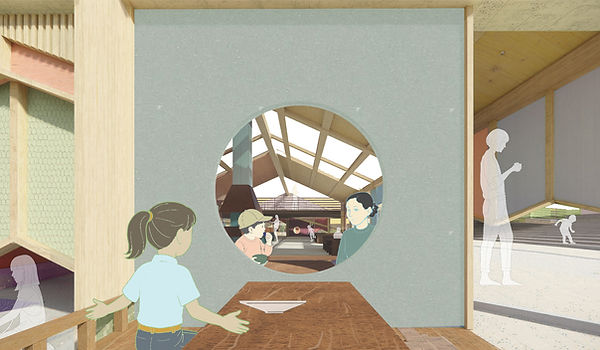
All housing and the birthday pavilion are placed between the orphanages to encourage movement, encounters, and connection. Micro interventions like playgrounds, health clinics, and learning centers are embedded near each orphanage, providing daily support and visibility.
These spaces are rooted in the idea of the deictic center, a physical and emotional point from which a child can orient themselves in the world. Through perspective layering, allocentric volumes, and spatial logics grounded in empathy, these interventions aim to make orphans feel seen, not managed. And yet, these structures are designed with impermanence in mind. These are not monuments to a broken system. They are ephemeral architectures of empathy.


bottom of page